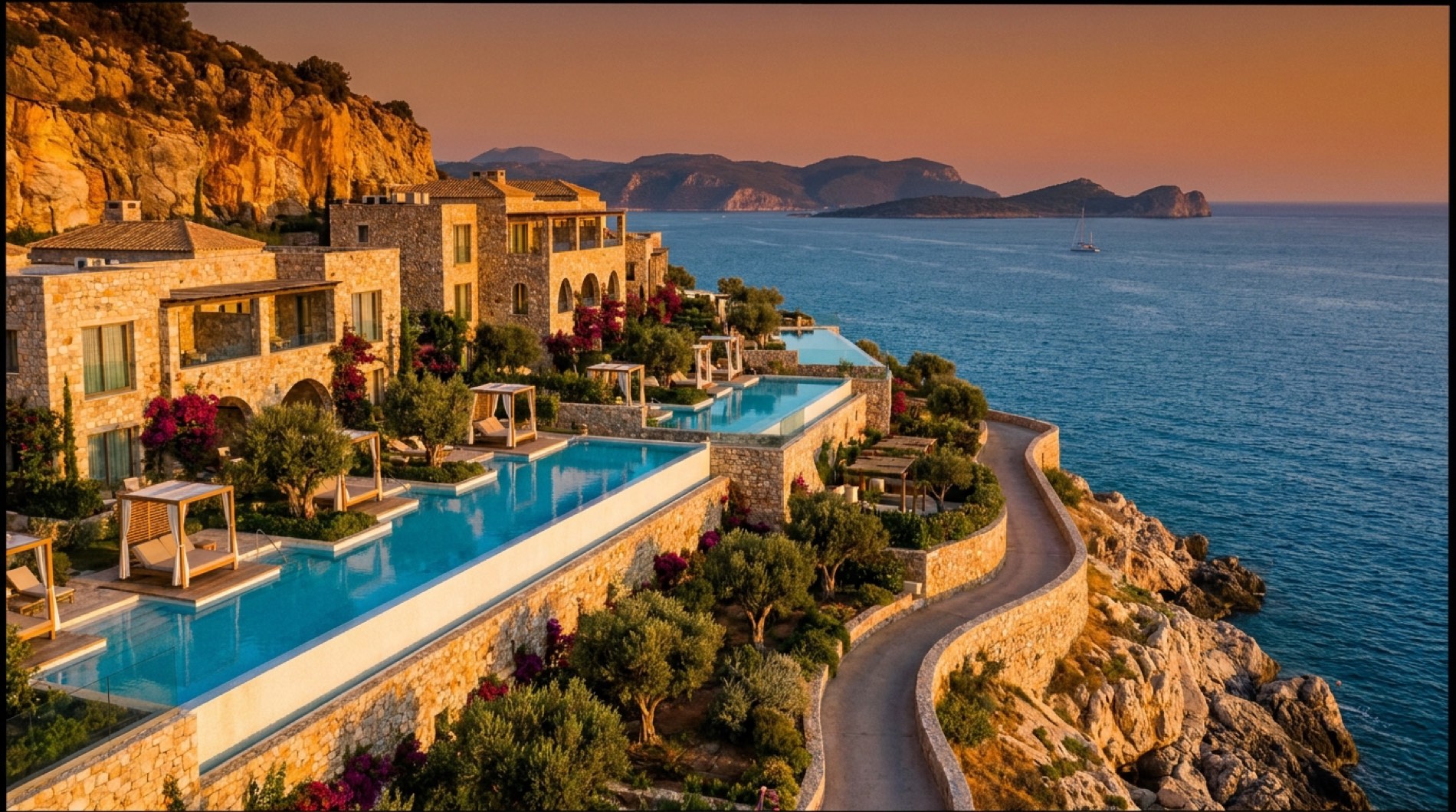
Most luxury hotels treat branding as decoration: a refreshed logo, a new colour palette, a tidier Instagram grid. Useful, but cosmetic. Real hotel branding is something else — the deliberate work of shaping how a property is perceived, so that the right traveller chooses you before they compare price, and remembers you long after they leave.
That perception is also the single most underrated lever on acquisition cost. When a property is already known and trusted, every campaign converts better and a growing share of demand arrives on its own. In this guide we look at what luxury hotel branding actually is, how it differs from marketing, why it makes guests cheaper to acquire, what a complete hotel brand identity contains, and how we build one — for independents and boutique hotels alike.
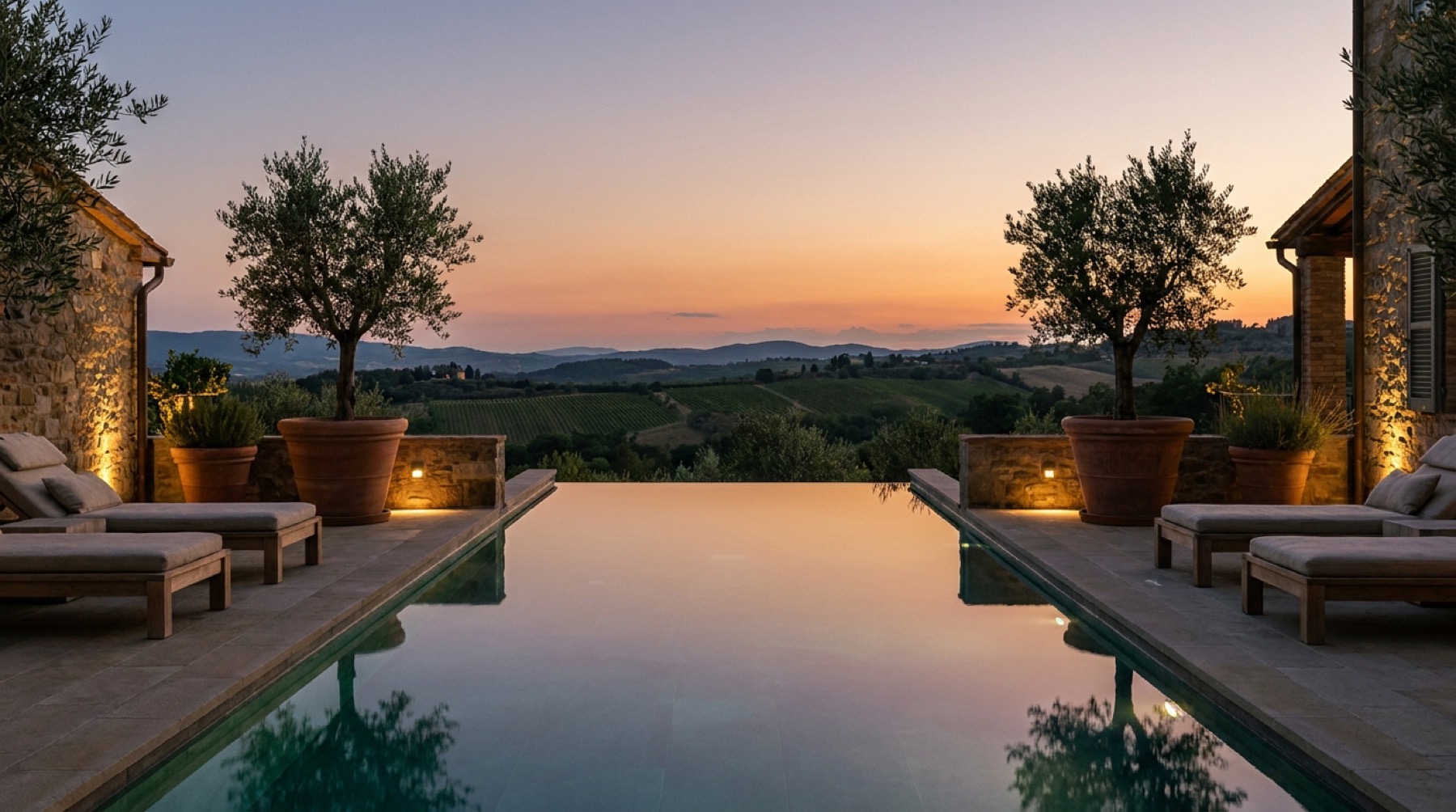
What hotel branding actually is
A brand is not a logo. A logo is a signature; the brand is everything the signature stands for. For a hotel, branding is the sum of the promise you make to a guest, the way that promise looks and sounds, and the experience that has to deliver on it from the first ad to the final goodbye.
Put in practical terms, luxury hotel branding works on four layers at once:
- 01
Positioning & promise. Who you are for, what kind of stay you stand for, and why a traveller should choose you over the property next door.
- 02
Verbal identity. Name, tone of voice and the language you use — the words that make you recognisable before anyone sees a photo.
- 03
Visual identity. Logo, typography, colour and, above all, a photography and film style that feels unmistakably yours.
- 04
Experience. The on-property and digital experience that has to live up to the promise, because a brand that over-promises erodes faster than one that never made a claim.
When these four layers are consistent, the brand feels premium. When they contradict each other, no budget can hide it.
Branding is not marketing — and that is the point
Branding and marketing get used as synonyms, and that confusion costs hotels money. Marketing campaigns capture demand that already exists: they find travellers who are searching for a property like yours and put you in front of them. Branding does something different — it creates the demand and the trust that make those campaigns cheaper and easier to run in the first place.
One is a long-term asset, the other is how you put it to work. A campaign stops the moment you stop paying for it. A brand keeps earning: it stays in memory, gets recommended, gets searched by name. This is why the two should never sit on separate budgets, managed by people who only meet on a Thursday call. Held together, brand fills the pool and lead generation converts it — the same logic that underpins a durable channel of direct bookings.
How a strong brand lowers the cost of acquiring guests
Branding sounds like an abstract line item. It is, in fact, the most concrete lever there is for keeping acquisition cost under control. The mechanism is simple: when a property is already known and trusted, a traveller who meets it mid-search decides faster and with fewer doubts. Every unit of spend works harder, because the ground is already prepared.
Being top of mind means being the property a traveller pictures first when they imagine that kind of stay. As you get there, a growing share of demand becomes spontaneous — direct visits, branded searches, word of mouth — and that demand costs almost nothing to capture. The cost of acquiring a new guest falls over time instead of climbing, which is the exact opposite of what happens when you only ever chase existing demand.
That is also why a strong brand is the most reliable route to a lower, more sustainable acquisition cost: it reduces dependence on paid demand and on platforms like Booking and Airbnb, so more of the margin — and the guest relationship — stays yours.
What a luxury hotel brand identity includes
A brand identity is the toolkit that makes everything above repeatable. When it is complete and coherent, every ad, every page and every piece of content reinforces the same idea instead of starting from scratch. When it is patchy, the property looks improvised — the one thing a luxury traveller will not forgive.
| Layer | What it covers | Why it matters |
|---|---|---|
| Strategy | Positioning, audience, the promise to the guest | Gives every decision a reason and a direction |
| Verbal | Name, tone of voice, messaging, tagline | Makes you recognisable in words, not just images |
| Visual | Logo, typography, colour, photography & film style | Creates instant, consistent recognition |
| Experience | Website, booking flow, on-property touchpoints | Delivers on the promise so trust compounds |
None of these works in isolation. A beautiful visual identity with no positioning behind it is style without substance; a sharp strategy with weak creative never gets noticed. The value is in the system, where each layer carries the same idea — and where the digital experience, from search to the booking engine, is treated as part of the brand rather than an afterthought.
Boutique branding vs large-group branding
Boutique hotel branding is not a smaller version of chain branding — it is a different discipline. A large group leans on scale, loyalty programmes and recognition built over decades. A boutique or independent property competes on distinctiveness: a point of view, a sense of place, a story that no group can replicate. Its scarcity is the asset, and the brand exists to make that scarcity legible to the right traveller.
That changes the priorities. For an independent, the brand has to do more of the work that a chain outsources to its name: it has to carry credibility on its own, signal the level of the experience before a guest arrives, and justify the rate without a familiar logo to lean on. Done well, this is an advantage — a boutique brand can be braver, warmer and more specific than any group, and travellers increasingly seek exactly that.
How enable.luxury builds your brand
We do not sell a logo and a moodboard. We build the brand inside the same system that generates guests, so the two reinforce each other from day one. In practice that means starting with an audit and brand analysis — understanding your positioning, audience and competitive set before a single dollar goes into campaigns.
From there we define the identity: the promise, the verbal and visual world, and the creative direction for photography and film. Our creatives use a range of AI tools to produce high-fidelity work, and if you already have photography we build on it — you test and approve every piece before anything goes live. Then the brand goes to work alongside lead generation, so that as awareness grows, acquisition cost comes down. We set the timelines for the build in the contract.
If you want to see how this applies to your property — whether you run an independent luxury or boutique hotel or a wider portfolio — we talk it through in a one-hour call. No pitch theatre, just a real conversation about where your brand stands and what would move it.